

Bringing Your Team Back Together with Live Events

Let’s be honest... your in-person corporate event entertainment can send the gathering in one of two directions:
People mix across teams, share real reactions, and leave feeling more connected than when they arrived.
Everyone attends physically... while remaining emotionally logged into email.
But what changes the room...?
Participation.
Bringing people together does not automatically create connection. You have to give them a reason to look up, join in, and experience something with colleagues outside their usual circle.
Here is how live entertainment can help.
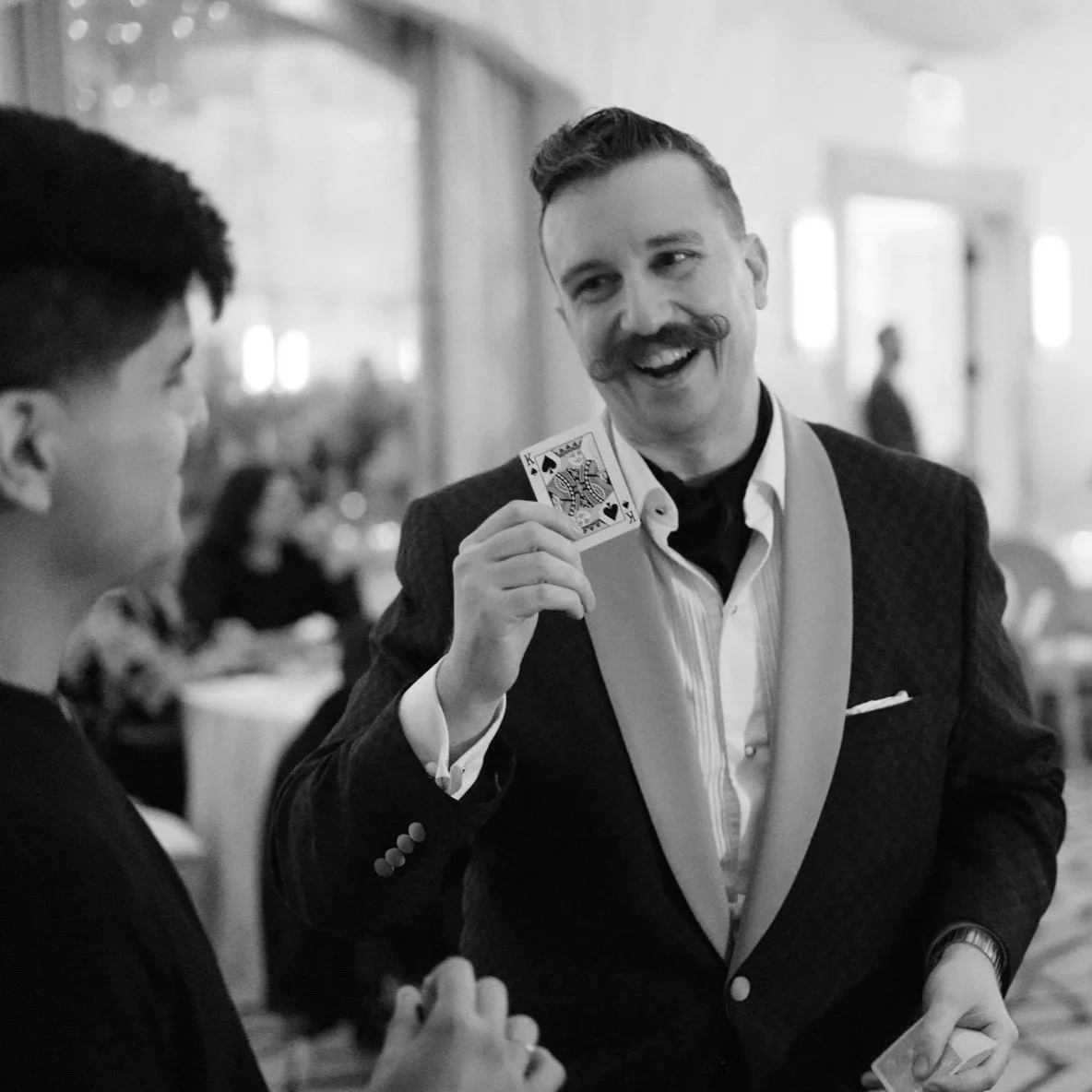
Step 1: In-Person Corporate Event Entertainment Needs a Purpose
Start with the reason everyone is in the room.
Are you welcoming new employees, reconnecting a distributed team, celebrating a milestone, hosting clients, or bringing departments together after a major change? Your answer should shape what the entertainment is meant to accomplish.
Possible goals include:
Breaking the ice before networking
Raising energy after presentations
Encouraging departments to mix
Rewarding the team after a demanding quarter
Creating a shared story around a company moment
Sound obvious? It is surprisingly easy to book something impressive without deciding what job it should do.
Once the purpose is clear, you can place entertainment where it supports the event instead of becoming an unrelated item on the agenda.
Step 2: Leave Space for People to Actually Connect
A full agenda can still produce an empty experience.
If every minute contains a keynote, panel, update, or structured exercise, your team has no room to talk naturally. Connection often happens in the spaces between the official content.
Protect time for arrivals, breaks, drinks, meals, and informal conversation. Then use entertainment to add energy to those moments without turning them into another compulsory session.
Here is the thing though... “networking time” on a schedule does not make networking comfortable. People often stay with the colleagues they already know or reach for their phones when a conversation stalls.
A shared live experience gives them something easy to discuss. That makes the next interaction feel less like an assignment and more like a real conversation.
Now you need a format that helps those reactions travel across the room.
Step 3: Create Shared Moments Across Team Lines
Teams naturally arrive in familiar groups.
Sales talks to sales. Leadership finds leadership. The remote employee searches the room for the one person whose face looks exactly like their profile photo.
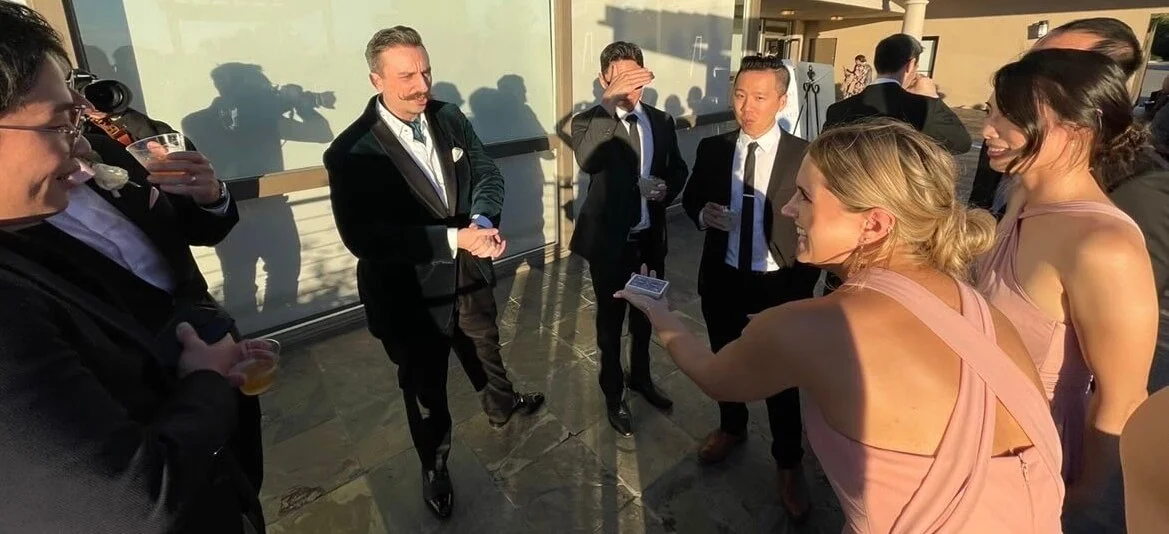
Interactive entertainment can create small shared moments that cut across those usual boundaries. With close up magic, for example, several people experience something impossible together and immediately begin comparing what they saw.
Nobody needs a clever introduction. The moment has already provided one.
Would a formal team building exercise create the same reaction? Maybe. But there is a difference between asking people to connect and giving them something they genuinely want to talk about.
The strongest entertainment does not force instant friendship. It lowers the social friction enough for a new conversation to begin.
That works especially well when the timing matches the energy of the event.
Step 4: Put the Energy Where the Agenda Needs It
Live entertainment should solve a timing problem, not create one.
Use it when attention naturally drops or when the group needs help shifting modes. The right placement can turn an awkward transition into part of the experience.
Strong options include:
Close up magic as guests arrive
Interactive entertainment during a reception
A short show after lunch or dinner
A featured moment before awards
Strolling entertainment between sessions
Jeff Black’s work with Disney, Snapchat, and Marvel shows what this looks like in different corporate rooms. The performance can support a networking reception, company celebration, or formal program without asking the entire event to rearrange itself around the magician.
And honestly? That flexibility matters when the keynote runs long.
Good placement protects the schedule. Good audience awareness makes the experience comfortable for everyone in it.
Step 5: Make Participation Comfortable Across the Company
Not everyone wants the spotlight, especially beside their manager.
Ask how the entertainer handles volunteers, senior leaders, new hires, international guests, and people who would rather watch. Participation should feel inviting, never compulsory or embarrassing.
The performer should also understand the company’s tone. A relaxed startup party and an executive client dinner may both welcome magic, but the language, pacing, and level of interaction should not be identical.
Does your team include remote employees meeting in person for the first time? Give them an easy route into the experience without treating them like visitors.
Professional entertainment makes the audience look good. It does not rely on awkward jokes, sensitive topics, or making one employee the target of the room.
When people feel safe joining in, the energy becomes more genuine and more useful after the event ends.
Step 6: Carry the Connection Beyond the Room
A successful event should not disappear on Monday morning.
Use the shared experience as a bridge into the next team conversation. Photos, short recap videos, internal messages, and informal references to the event can keep the memory alive without turning it into a corporate campaign.
You can also ask simple follow up questions:
Who did you meet outside your usual team?
Which moment changed the energy in the room?
What should the next live event include?
The goal is not to measure whether everyone enjoyed the same trick. It is to learn whether the event helped people participate, connect, and feel part of something larger than their individual workload.
Want the momentum to last? Give teams a practical reason to reconnect afterward, whether that is a project conversation, smaller lunch, or shared next step.

Make the Trip Into the Room Worth It
Your live event can bring people together in a meaningful way, or simply recreate the workday in a hotel ballroom with better snacks.
Strong in-person corporate event entertainment turns attendance into interaction. It supports a clear purpose, opens space for conversation, connects different groups, lifts the agenda, and gives people a shared memory to carry forward.
You do not need the biggest production. You need an experience that respects the audience, fits the schedule, and gives people a genuine reason to engage with one another.
If you want your next company gathering to feel more human from the moment guests arrive, check your date with Jeff Black and start the conversation.
FAQ
-
Effective entertainment supports a clear event goal, fits the schedule, and gives people a comfortable way to participate together.
-
Use it during arrivals, receptions, transitions, meals, or another point where the room needs energy. It should support the agenda rather than compete with important content. See What Makes a Magic Performance Truly Unforgettable?
-
Start with your date, venue or location, guest count, general schedule, and the experience you want for your guests. See How to Hire a Magician
Jeff Black is a Los Angeles-based magician who has performed at corporate events for Disney, Snapchat, Marvel, and hundreds of companies across Southern California. To check availability for your next event, visit jeffblackmagic.com.