

The Psychology Behind Why Magic Captivates Every Audience

Let’s be honest... the psychology of magic can send your event in one of two directions:
Your guests lean in, laugh together, and spend the rest of the night asking, “How did that happen?”
They watch politely, clap politely, and return to discussing parking... also politely.
But what changes the room...?
But what creates the difference...?
Connection.
Magic is not captivating because people enjoy being fooled. It works because it plays with attention, expectation, emotion, and the basic human need to share surprising moments with other people.
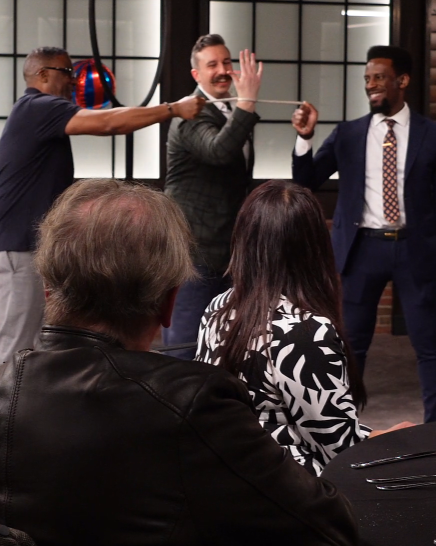
Step 1: In-Person Corporate Event Entertainment Needs a Purpose
Your brain does not like an unfinished story.
The moment a magician asks someone to choose a card or think of a word, your mind starts searching for the answer. You want to know where the moment is going, even if you had no interest in card tricks thirty seconds earlier.
Psychologists often describe this pull as a gap between what you know and what you want to know. Magic opens that gap deliberately, then keeps it open just long enough to hold your attention.
You have felt this with a good mystery, right? The unanswered question becomes difficult to ignore.
At an event, curiosity gives guests an immediate reason to pause and engage. Once the magician has their attention, the next move is to challenge what they expect to happen.
Step 2: Surprise Breaks the Brain’s Prediction
Your brain is constantly guessing what comes next.
You expect a dropped object to fall. You expect a shuffled deck to stay mixed. You definitely expect your signed card to remain somewhere in the deck, not appear inside an orange.
Magic becomes powerful when reality seems to violate a confident prediction. For a brief moment, the brain has two incompatible ideas: “I know what should have happened” and “I saw something else happen.”
That little collision creates surprise, laughter, and sometimes the highly technical response of staring with your mouth open.
Here is the thing though... surprise alone is not enough. A random loud noise is surprising too, but nobody hires one for a cocktail hour. The moment needs meaning, and that meaning comes from personal involvement.
Step 3: Participation Makes the Impossible Feel Personal
Watching is one thing. Holding the evidence is another.
When your guest shuffles the cards, names the word, or keeps the object in their own hand, the experience belongs to them. They are not simply watching a performer claim something impossible happened. They helped create the conditions that made it seem impossible.
That sense of participation also removes the invisible wall between entertainer and audience. People become part of the story without needing to stand on a stage or deliver a speech.
And honestly? That matters at events where some guests love attention and others would rather hide behind a centerpiece.
A skilled magician offers participation without making anyone feel trapped or embarrassed. Jeff Black’s performances for Disney, Snapchat, and Marvel show what that balance looks like: the guest becomes important, but never becomes the joke.
Once one person is involved, everyone nearby starts sharing the reaction.

Step 4: Put the Energy Where the Agenda Needs It
Magic gives people something easy to talk about.
At weddings, corporate events, and private parties, guests often arrive in separate social circles. Some know everyone. Others know the host, one coworker, or whichever person is currently guarding the appetizers.
A strong magical moment creates a shared experience with no awkward introduction required. People laugh at the same beat, compare explanations, and ask each other what they saw. Suddenly, the conversation has already started.
Sound familiar? The easiest social interactions usually begin when everyone has something outside themselves to focus on.
This is why close up magic works especially well during arrivals and cocktail hours. It does more than entertain one small group. The reaction attracts nearby guests, and the energy travels through the room. That social energy also strengthens the memory of what happened.
Step 5: Emotion Makes the Moment Stick
You remember feelings better than schedules.
A month after an event, your guests may forget what time dinner started or which appetizer came on the tiny spoon. They are more likely to remember the moment that made them gasp, laugh, or feel genuine wonder.
Emotion tells the brain that an experience matters. Surprise raises attention. Laughter adds pleasure. Wonder encourages people to keep thinking about the moment after it ends.
That combination is why a short interaction can become one of the most repeated stories from the night. “You had to be there” is basically the unofficial slogan of a great live event.
Want your event to feel memorable? Give guests an emotional peak, not just a packed timeline.
But there is one more reason magic reaches such different audiences: it taps into something adults rarely give themselves permission to feel.
Step 6: Wonder Lets Adults Play Again
Adults spend most of the day trying to understand and control what happens next.
Magic offers a short break from that job. For a few minutes, you can enjoy not having the answer. You do not need to solve the method, manage the schedule, or prove that you are the smartest person near the bar.
That feeling is wonder. Children enter it quickly, but adults often enjoy it even more because it interrupts the familiar rules of everyday life.
Does everyone react the same way? Of course not. Some people laugh. Some go silent. Some immediately begin an investigation worthy of a detective series.
The reaction may change, but the underlying experience is widely understood. Something impossible seemed to happen right in front of you. That simple idea crosses ages, backgrounds, job titles, and social groups, which is exactly why magic can captivate such a varied room.

Give Your Guests Something to Feel Together
Your event can become the night people relive on the way home, or the one that ends with a polite “That was nice” before everyone forgets the details.
The difference is not just the trick. The psychology of magic turns curiosity into surprise, surprise into participation, and participation into shared emotion. That is what gives a few impossible minutes so much staying power.
When you are choosing entertainment, do not only ask what the performer does. Ask how your guests will take part, how the performance fits the room, and what they will feel when it is over.
If you want to give your guests a shared story they will actually enjoy retelling, check your date with Jeff Black and start the conversation.
FAQ
-
Magic creates a gap between what you know and what you want to understand. Your brain keeps watching because it wants that unanswered question resolved. See What Makes a Magic Performance Truly Unforgettable?
-
Participation makes the experience feel personal and gives guests direct evidence that something impossible happened. It also creates connection without forcing anyone into an embarrassing spotlight.
-
Yes. A shared magical moment gives strangers an easy conversation starter and helps separate social circles feel like one group.
Jeff Black is a Los Angeles-based magician who has performed at corporate events for Disney, Snapchat, Marvel, and hundreds of companies across Southern California. To check availability for your next event, visit jeffblackmagic.com.