

What Your Wedding Planner Wants You to Know About Entertainment

Let’s be honest... good wedding planner entertainment advice can send your reception in one of two directions:
Your guests stay engaged, every vendor knows the plan, and the night flows without feeling scheduled to death.
Three things happen at once... while your planner quietly develops a new facial expression.
But what makes the difference...?
Coordination.
Your planner wants you to have memorable entertainment. They also want it to fit the room, the timeline, and the work happening around it.
Here is what they wish every couple knew before booking.

Step 1: Wedding Planner Entertainment Advice Starts With Your Guests
Choose for the room you will actually have.
It is easy to fall in love with a performance clip online. Before booking, ask whether that experience fits your guest list and wedding style. A formal show may be perfect for a seated dinner, while close up entertainment can work better during cocktails or transitions.
Think about:
The number and age range of your guests
How many people already know each other
The level of audience participation
The formality of the reception
Any cultural traditions or accessibility needs
Will your guests want to gather and watch, or keep moving and talking? That answer matters more than whatever happens to be trending.
Once you know the experience you want, bring your planner into the conversation before the agreement is signed.
Step 2: Ask Your Planner Before You Book
Your planner can spot logistical problems hiding behind a great idea.
They may know that the venue restricts outside entertainment, requires insurance, limits sound, or has almost no storage space. A quick planner review can prevent a difficult contract later.
Share the performer’s proposal, technical requirements, arrival time, and expected setup. Your planner can check whether those details work with the venue agreement and the rest of your vendor team.
Here is the thing though... asking for input does not mean handing over the decision. You still choose the entertainment that feels right for you.
Your planner simply helps you understand what the choice requires.
With the booking details checked, the next job is placing the entertainment where it helps the day instead of competing with it.
Step 3: Give Entertainment a Real Place in the Timeline
“Sometime after dinner” is not a plan.
Entertainment needs a clear start time, duration, and purpose within the reception. Is it welcoming guests during cocktail hour? Covering the transition into dinner? Creating a featured moment before dancing begins?
Avoid stacking it against another important experience. Guests cannot watch a magician, listen to a speech, visit the photo booth, and notice the sunset portraits at the same time. Technically, they can try... but nobody wins.
Ask your planner what happens immediately before and after the performance. Food service, photography, room changes, and formal dances may all affect the best time.
The goal is not to pack every minute. It is to create a rhythm that gives each moment enough space to land.
Once the timing works, make sure the physical room supports it too.
Step 4: Plan Around the Space and Guest Flow
Entertainment changes how people move through a venue.
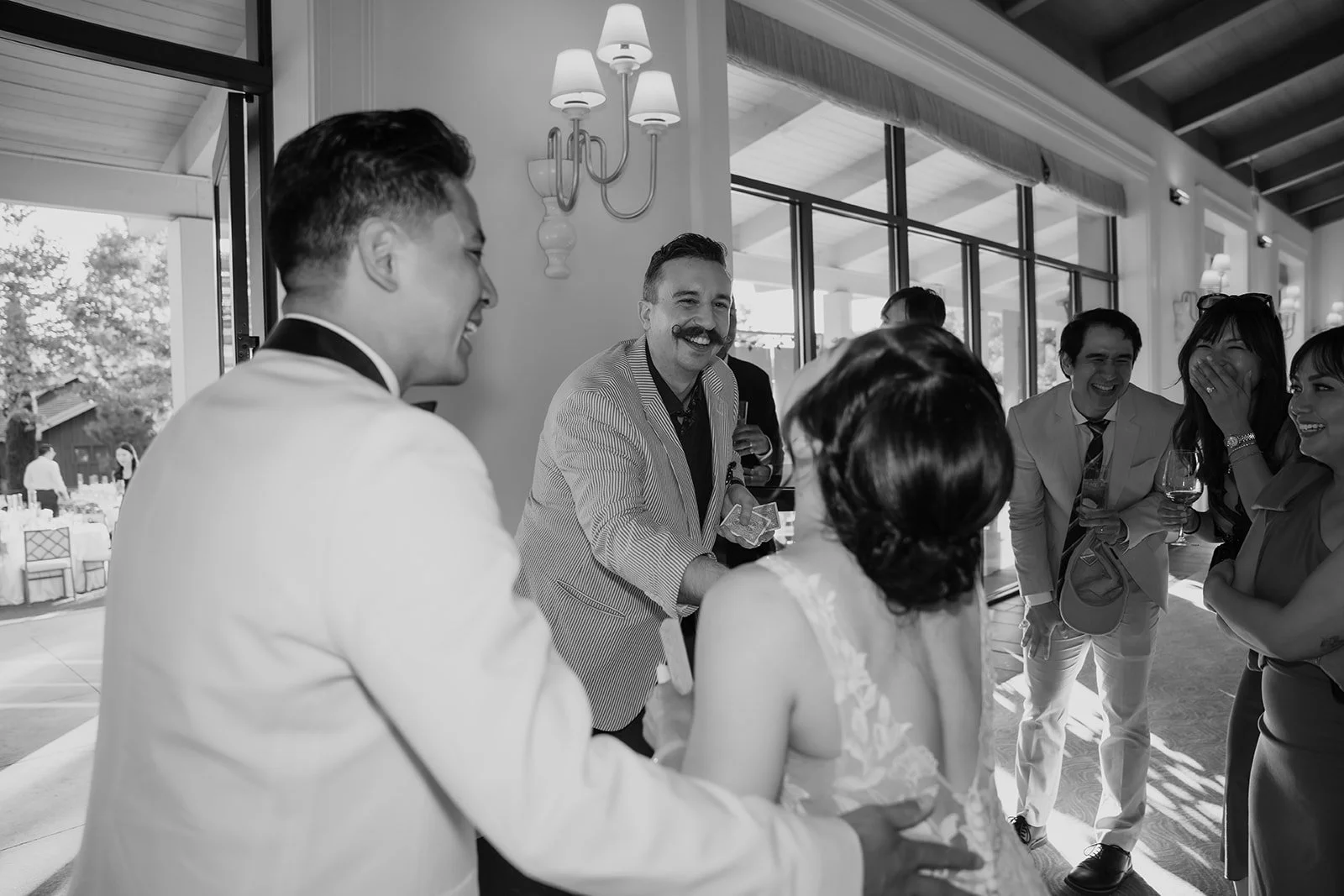
A stage show needs clear sightlines and seating. A band needs room for equipment. A photo booth needs a location that guests can find without creating a line across the dining area. Close up magic needs natural gathering points with enough room for small groups.
Your planner will consider:
Entrances and exits
Bar and catering traffic
Sound levels
Lighting and power
Access for setup and removal
Sound familiar? The prettiest corner is not always the most functional one.
Jeff Black’s wedding performances offer a useful example. Strolling magic can move with the crowd during cocktails, but it still works best when the schedule and floor plan allow guests to pause and enjoy it.
Now the experience has a time and place. Next, connect the people responsible for making it happen.
Step 5: Let Your Vendors Talk to Each Other
You should not be the messenger on your wedding day.
Give your planner and entertainer permission to coordinate directly. One shared timeline and one clear event day contact can prevent missed cues, setup confusion, and a stream of questions while you are trying to get married.
The entertainment may need to communicate with:
The venue about access and restrictions
The DJ about microphones and music
The photographer about key reactions
The caterer about service timing
The planner about cues and schedule changes
And honestly? Great vendors usually want this coordination. It helps everyone do better work.
Make sure the final timeline includes arrival, setup, performance, and departure details. Then let the professionals manage the handoffs without routing every update through you.
Even with a strong plan, your planner still wants one more thing: flexibility.
Step 6: Hire Entertainment That Can Adapt
Weddings rarely run exactly to the minute.
Portraits take longer. Dinner service slows down. A speech grows a surprise second chapter. Your entertainer should be able to adjust without making the change feel like a problem.
Ask how they handle delays, room changes, weather, and a guest count that shifts. A professional should have backup material, flexible timing, and a calm way of communicating with your planner.
Would you rather have a performer demand the original start time or help your planner find the best new one? Exactly.
Flexibility does not mean the schedule can change without limits. Contracts, travel, and other commitments still matter. It means the entertainer understands that protecting the guest experience is more important than proving the first plan was correct.
That attitude gives your planner room to solve the day without creating unnecessary drama.

Make Entertainment Part of the Plan
Your wedding can feel effortless, with guests enjoying every transition, or it can become a competition between dinner, speeches, photos, and three forms of entertainment.
The best wedding planner entertainment advice is to coordinate early. Choose for your guests, review the booking with your planner, protect space in the timeline, check the room, connect the vendors, and hire someone who can adapt.
You do not need to control every backstage detail. You need a clear plan and a team that communicates when the plan changes.
If close up magic sounds like the right fit for your reception, check your date with Jeff Black and include your planner in the conversation.
FAQ
-
The final choice is yours, but your planner should review the logistics, venue restrictions, timing, and technical needs before you sign.
-
It depends on its purpose. Entertainment can welcome guests during cocktails, cover a transition, or become a featured moment, but it should not compete with speeches, dinner, or formal dances. See Your Cocktail Hour Entertainment
-
Your planner, venue, DJ, photographer, and caterer may all need timing or setup information. Direct communication keeps you from becoming the event day messenger.
Jeff Black is a Los Angeles-based magician who has performed at corporate events for Disney, Snapchat, Marvel, and hundreds of companies across Southern California. To check availability for your next event, visit jeffblackmagic.com.