

Why Your Corporate Holiday Party Needs Live Entertainment

You’ve booked the venue.
The menu is approved. The invitations are going out. Someone has probably already asked about the bar.
Then comes the question that sometimes gets pushed surprisingly far into the planning process:
“So... what are we actually doing for entertainment?”
It is an easy question to underestimate.
After all, your guests already have food, drinks, music, coworkers, and a chance to celebrate. What else do they need?
The answer is not necessarily a bigger production.
It is a reason to participate.
A corporate holiday party is one of the few times during the year when people from different departments, offices, locations, and levels of the company are in the same room without a spreadsheet or meeting agenda in front of them.
That opportunity is worth designing for.
Start With the Room, Not the Entertainment
Before you choose a performer, think about what your guests will actually be doing when they arrive.
Are they moving through a cocktail reception?
Will everyone sit down for dinner?
Is there a formal awards program?
Will executives be making remarks?
Do you have a large open space, several smaller areas, or a venue where guests naturally divide into groups?
These details matter.
The entertainment that works beautifully during a cocktail hour may not be the same entertainment you would want immediately before a keynote or during dinner service.
And that is where good corporate entertainment differs from simply hiring an act.
The goal is not to squeeze a performance into your schedule.
The goal is to make the entertainment feel like it belongs there.
Think About the First 30 Minutes
Here is something event planners know well: the beginning of a party can be awkward.
People arrive in small groups. Coworkers find each other. New employees look for familiar faces. Someone checks where the bar is.
Then everyone waits.
This is where interactive entertainment can be surprisingly useful.
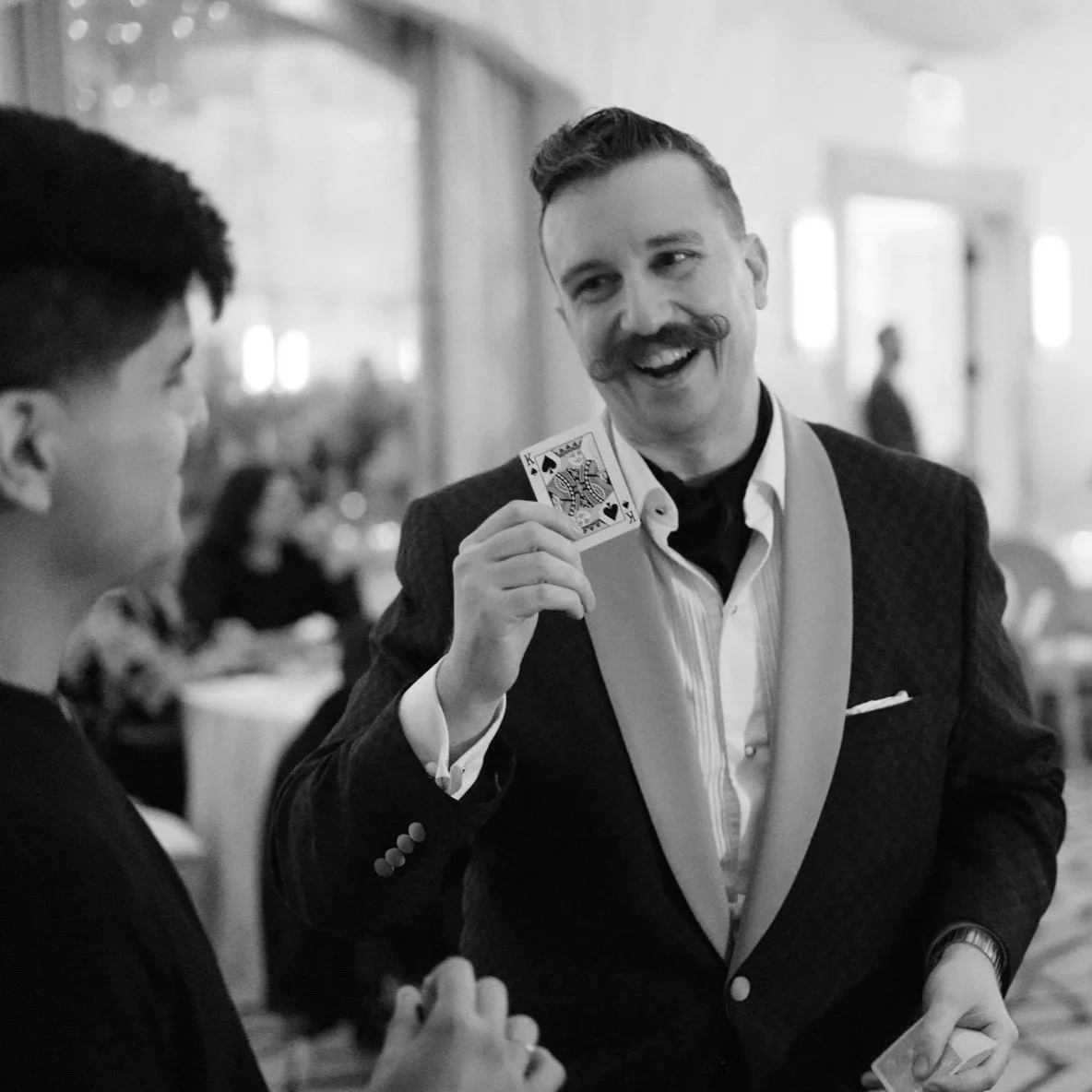
Close-up magic, for example, gives a small group something to experience together almost immediately. One person sees something impossible happen. Another wants to know how it worked. Someone else gets pulled into the conversation.
Nobody has to announce:
“Okay, everyone! Time to network!”
Thank goodness.
The interaction happens naturally because people have something interesting to talk about.
That is one reason strolling entertainment can work so well during arrivals and cocktails. It fills the social space without demanding that the entire room stop what it is doing.
You Don't Need to Turn the Party Into a Show
There is a common misconception that live entertainment means putting everyone in rows and asking them to watch a 45-minute performance.
Sometimes that is exactly the right choice.
Sometimes it is completely wrong.
Your holiday party might benefit more from entertainment that moves through the room than entertainment that takes over the room.
A few possibilities:
Close-up magic during cocktails
A featured magic show after dinner
Live music during the reception
A short performance before awards
Interactive entertainment between scheduled portions of the evening
A combination of strolling entertainment and a featured show
The format should match the event.
If guests are eating, talking, and moving around, entertainment that can adapt to that environment may make more sense than something that requires everyone's attention.
If you have a dedicated stage and a scheduled program, a featured performance might create a stronger shared moment.
Neither approach is automatically better.
The room decides.
Give People More Than One Way to Participate
Not everyone at your holiday party wants to dance.
Not everyone drinks.
Not everyone wants to volunteer in front of 200 coworkers.
And some people absolutely love being the person who gets called on stage.
You have all of them at the same event.
That is why good entertainment should leave room for different personalities.
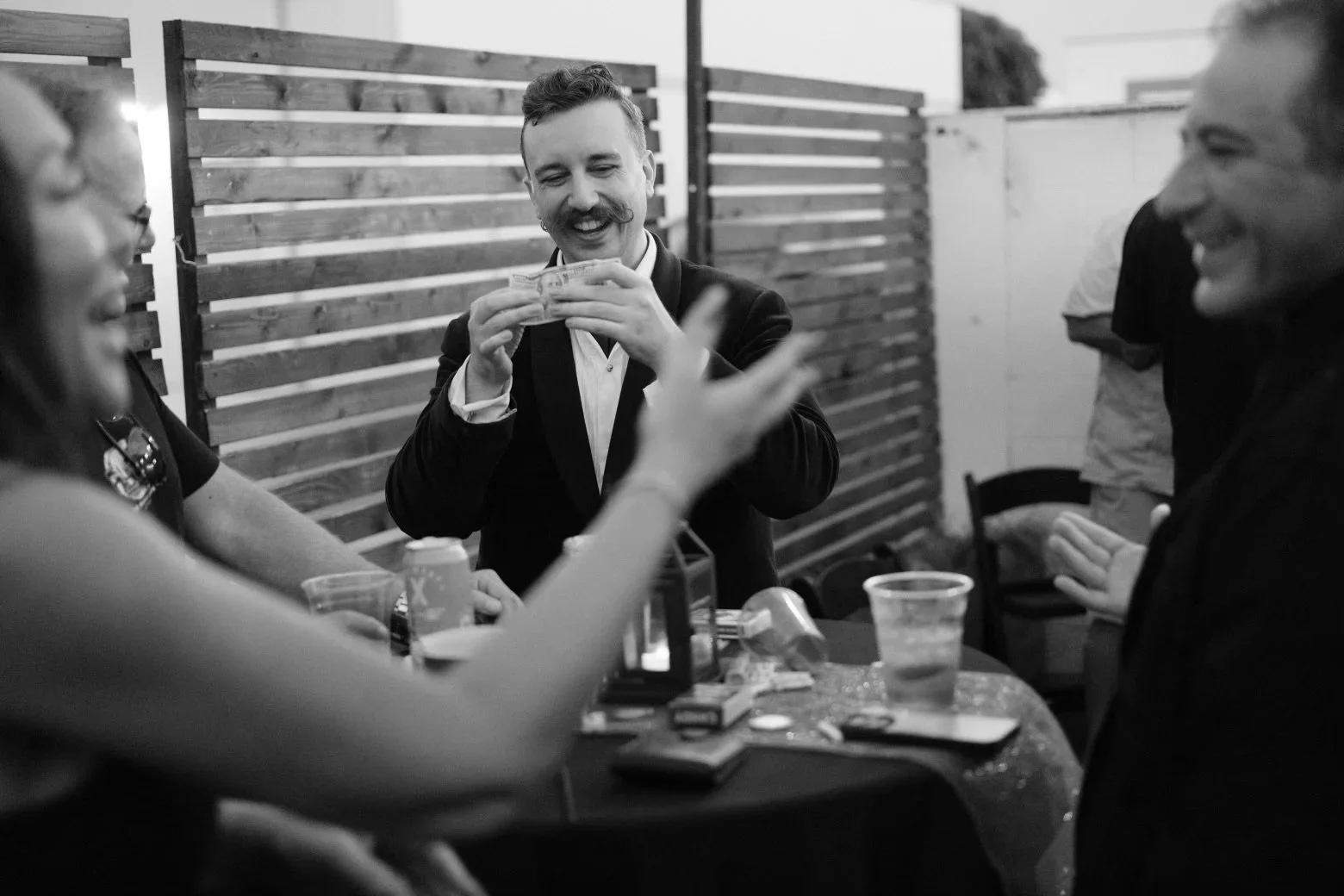
With close-up magic, one guest can participate directly while five others watch. Someone else can simply enjoy the reaction. A quieter guest can watch from the edge of the group without being put on the spot.
That flexibility matters at corporate events because your audience is rarely one type of person.
You have executives, new hires, longtime employees, spouses or partners, clients, remote employees meeting in person, and people who have very different ideas about what makes a party enjoyable.
The entertainment should work for the room you actually have.
The Best Moments Give People Something to Talk About
Think about the last corporate party you attended.
You may remember the food.
You may remember the venue.
You may remember who gave the longest speech.
But there is a good chance the stories people tell afterward involve something unexpected.
Someone's reaction.
Something funny that happened.
A moment nobody saw coming.
That is what live entertainment can add.
A magician makes an impossible prediction happen in front of a group.
An employee participates in something they will probably talk about for the next six months.
A room full of people experiences the same surprising moment at the same time.
Those moments become part of the story of the event.
And that is different from simply filling time on the schedule.
Corporate Entertainment Requires a Little More Judgment
A private party and a corporate event are not the same thing.
At a company holiday party, the performer has to understand the room.
That means knowing how to involve people without embarrassing them. Knowing when a group is engaged and when they are busy having another conversation. Understanding that the CEO, an intern, a client, and an employee's guest may all have very different comfort levels.
The performer should also be comfortable working around speeches, awards, dinner service, photographers, venue staff, and last-minute schedule changes.
In other words, you're not only hiring someone who can perform.
You're hiring someone who knows how to perform at a corporate event.
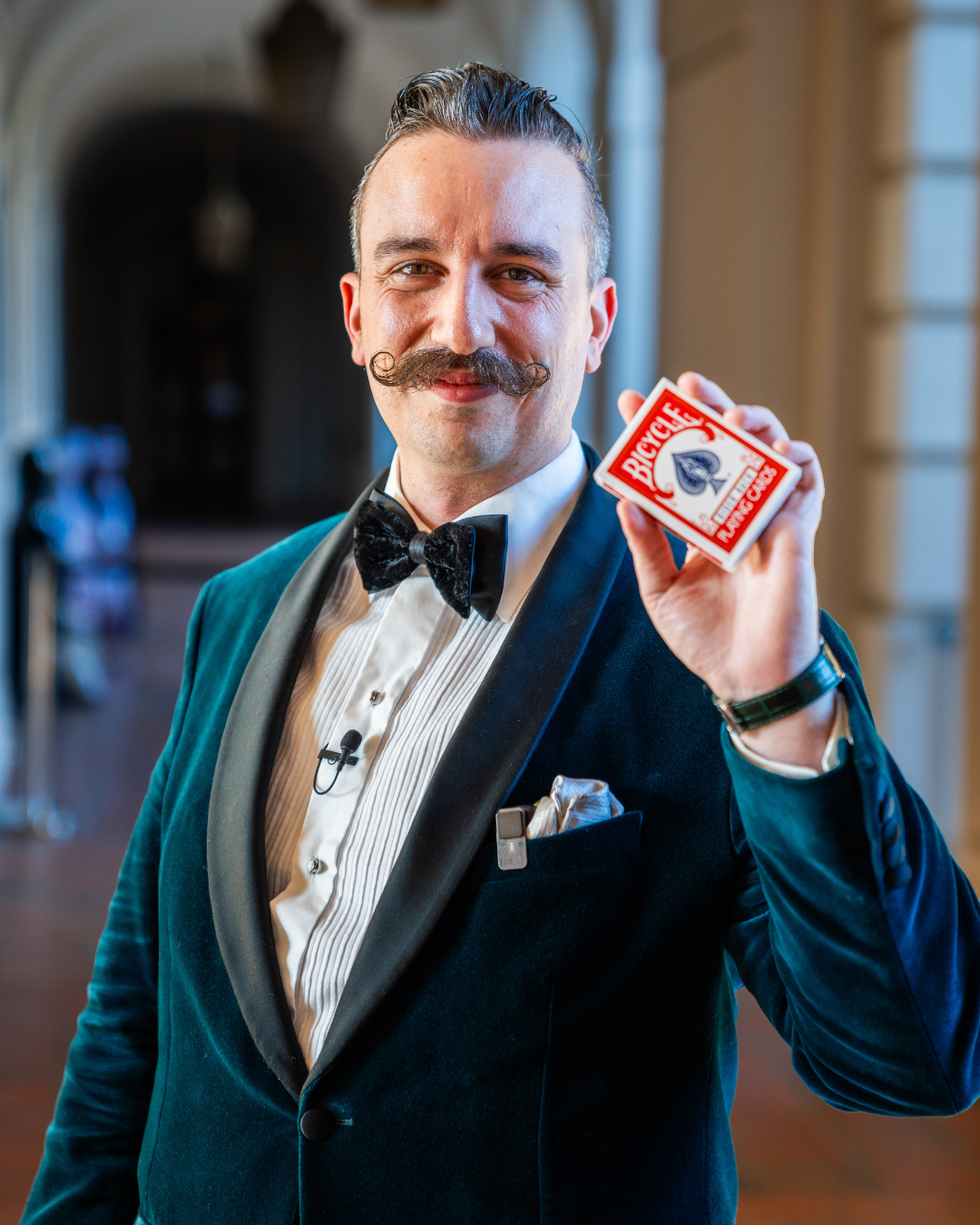
Jeff Black has performed for companies and organizations including Disney, Snapchat, and Marvel. Every company has its own culture, and every event has its own personality.
The entertainment should adapt to that.
Ask to see full performance footage rather than only promotional clips. Ask about corporate experience. Find out how the performer handles volunteers and whether the material is appropriate for your audience.
And pay attention to the questions they ask you.
A professional who wants to understand your event before discussing the performance is usually thinking about more than just getting on stage.
Make Entertainment Part of the Plan
Your holiday party does not need to become a spectacle.
It does not need the biggest stage, the loudest production, or entertainment running from the moment guests arrive until the final song.
It needs a few well-chosen moments that make the evening feel intentional.
Maybe that means magic during cocktails while people are getting comfortable.
Maybe it means a featured show after dinner.
Maybe it means both.
The important question is not:
“What entertainment should we book?”
Start with:
“What do we want people to experience when they're here?”
Once you answer that, the entertainment becomes much easier to choose.
Because the goal is not simply to keep employees occupied.
It is to give them a reason to look up from their table, meet someone from another department, laugh with their coworkers, and leave with a story from the night.
That's what makes a holiday party feel like a celebration.
And if you are looking for corporate holiday party entertainment that can adapt to your guests, your venue, and your schedule, check your holiday date with Jeff Black and start the conversation.
FAQ
-
The best format depends on your venue, guest count, schedule, company culture, and the type of experience you want to create. Close-up magic works especially well for cocktail receptions because guests can participate without stopping the entire event.
-
Live entertainment can work during guest arrivals, cocktails, dinner transitions, before awards, or as a featured performance after dinner. The right timing depends on the format and how you want guests to move through the evening.
-
Choose entertainment that allows guests to participate at different comfort levels. People should be able to volunteer, watch, join a small group, or simply enjoy the reactions without being pressured to participate.
Jeff Black is a Los Angeles-based magician who has performed at corporate events for Disney, Snapchat, Marvel, and hundreds of companies across Southern California. To check availability for your next event, visit jeffblackmagic.com.